 Huishi
Huishi
Huishi
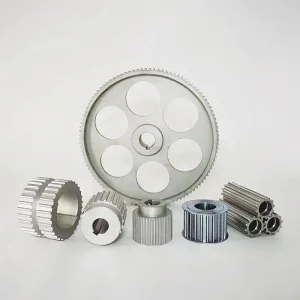
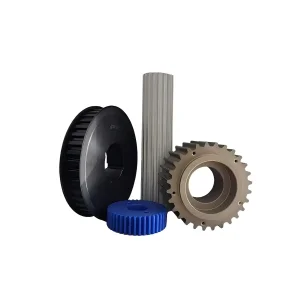
In the landscape of industrial motion control, the Gt2 20t Pulley serves as a fundamental building block. Unlike generic transmission components, the GT2 profile—specifically the 2mm pitch—is engineered to minimize backlash and maximize positional accuracy. This is critical for industries demanding high-fidelity output, such as 3D printing, medical diagnostics, and semiconductor assembly.
The global market for transmission components is seeing a compound annual growth rate driven by the proliferation of automation. From European robotic arms to Asian electronic assembly lines, the Gt2 20t pulley is ubiquitous. We analyze that the market is moving away from low-cost, disposable plastic pulleys toward high-precision aluminum and steel alloy components. This shift ensures the longevity of machines and reduces downtime, offering a higher ROI for factory owners.
The Gt2 20t pulley is the "gold standard" for desktop and industrial 3D printers. Its geometry reduces chordal action, leading to smoother surface finishes on printed parts. Our engineering team ensures each gear profile matches exact ISO/DIN standards.
For articulated robots and small conveyor systems, the 20t pulley provides the perfect step-down ratio, allowing precise movement control without the need for complex, heavy gearboxes.
As a global supplier, we adhere to strict international material certifications (RoHS, REACH). We provide localized technical support, ensuring that whether you are in North America, Europe, or SE Asia, your supply chain remains uninterrupted and compliant.
Since 2010, Qingdao Huishi has bridged the gap between raw manufacturing and precision engineering. We do not just supply parts; we supply performance. With over 30 design patents and ISO9001 certification, our commitment to quality is verifiable. We leverage advanced CNC machining to produce Gt2 pulleys that meet the tightest tolerance requirements, ensuring our clients receive products that function flawlessly out of the box.
A 20-tooth pulley is the optimal starting point for most stepper motors. It provides a balance between rapid movement and the torque required for start/stop cycles, minimizing the "ringing" artifacts often seen in 3D printing.
Aluminum is ideal for weight-sensitive applications (e.g., printer heads) where inertia must be low. Steel is recommended for high-torque, industrial heavy-duty transmission where durability outweighs weight considerations.