 Huishi
Huishi
Huishi
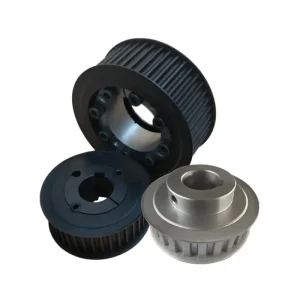
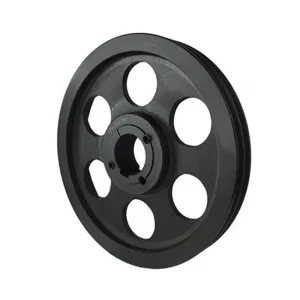
In the modern era of Industry 4.0, the requirement for high-low pulley systems and transmission components has surpassed simple mechanical function. As a leading manufacturer and supplier, we observe a paradigm shift towards higher precision, material durability, and seamless integration with automated machinery. Our analysis covers the critical intersections of material science, mechanical engineering, and global supply chain resilience.
The global demand for high-low pulleys is driven by the rapid expansion of 3D printing, medical device manufacturing, and high-speed packaging industries. Clients are now demanding custom-tailored solutions rather than off-the-shelf components. The trend points towards lightweight, wear-resistant materials (PU/Rubber) that reduce rotational inertia and energy consumption.
For international buyers, the challenge lies in balancing cost with strict quality compliance. Our sourcing model integrates ISO9001 quality management with regional localization support. By leveraging our partnerships with brands like Megadyne and Continental, we offer a hybrid catalog that bridges the gap between premium global brands and cost-effective, high-quality custom manufacturing.
Looking ahead, we are focusing on "Smart Transmission." This involves the integration of IoT-enabled sensors in pulleys to monitor vibration, heat, and wear patterns in real-time. This predictive maintenance approach allows manufacturers to prevent costly downtimes. Our R&D department is currently exploring ceramic-composite pulleys for extreme thermal environments, pushing the boundaries of traditional metal and polymer engineering.
We believe in Transparent Manufacturing. Every product from our factory undergoes rigorous stress testing. Our compliance roadmap involves maintaining full material traceability, ensuring every pulley, belt, or sprocket meets international safety and environmental regulations (RoHS, REACH), providing peace of mind for distributors and end-users alike.
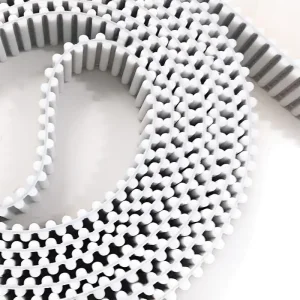
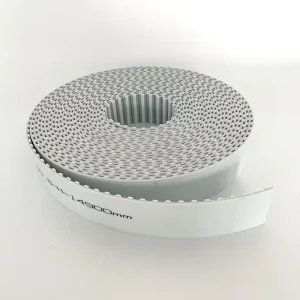
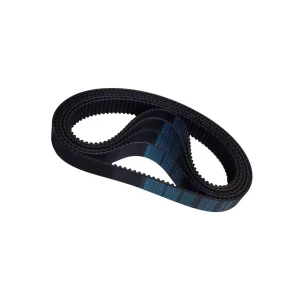
Q: What is the main difference between PU and Rubber timing belts?
A: PU belts offer higher abrasion resistance and chemical stability, ideal for clean-room environments. Rubber belts, reinforced with fiberglass or steel cords, provide better flexibility and shock absorption for heavy-duty drive systems.
Q: How do you handle custom orders based on blueprints?
A: We utilize advanced CNC machining and mold-making capabilities. Upon receiving your design/blueprint, our engineering team performs a feasibility analysis, then proceeds to prototyping, ensuring the final product matches your exact tolerance requirements.