 Huishi
Huishi
Huishi
In the modern era of industrial automation, the role of Custom Belt PVC Suppliers & Factory entities has evolved from mere commodity providers to critical engineering partners. As a senior SEO Growth Director, I analyze this sector through the lens of Information Gain: moving beyond basic specs to provide actionable insights into material science, supply chain logistics, and the integration of Industry 4.0 standards.
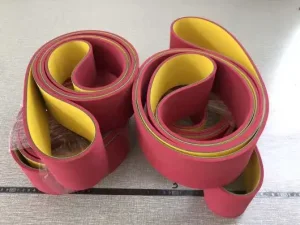
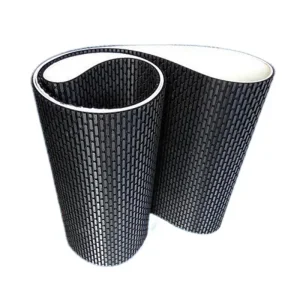
PVC (Polyvinyl Chloride) conveyor belts have long been the backbone of light-duty material handling. However, the market is shifting towards hybridized materials—blending PVC for cost-effectiveness and chemical resistance with Polyurethane (PU) for high-abrasion resistance and food-grade safety. Customization in this sector is not just about length and width; it is about coefficient of friction engineering, flame retardancy (ISO 340 standards), and antistatic properties required in hazardous environments.
The next decade of manufacturing focus lies in "Smart Belting." Our research indicates that clients are increasingly looking for:
As a leading supplier, Qingdao Huishi Transmission Equipment Co., Ltd. represents the intersection of robust manufacturing capability and agile R&D. By maintaining a 6,000 sqm facility and investing in 40+ precision mechanical units, we address the "Custom" aspect of the supply chain. We don't just sell belts; we provide transmission architecture solutions that reduce downtime and maintenance costs for industries ranging from textile machinery to petrochemical logistics.
Q: Why choose PVC over Rubber or PU for my conveyor system?
A: PVC is highly versatile, cost-effective for light to medium loads, and offers excellent resistance to many chemicals and oils. If your application involves direct food contact or extreme abrasion, PU is typically recommended, but for general logistics and manufacturing, PVC provides the best ROI.
Q: Can you handle non-standard custom specifications?
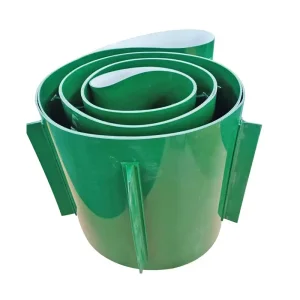
A: Yes. As a direct factory, we specialize in custom widths, thicknesses, and the addition of specific features like conducting bars, baffles, and decorative patterns to suit unique conveyor geometries.
Q: How does the company ensure quality compliance?
A: We strictly adhere to ISO9001 quality management standards. Every batch undergoes rigorous tensile strength, adhesion, and wear testing before leaving our facility.