
Huishi
Choosing the right belt can determine whether a production line runs smoothly or stops unexpectedly. This guide introduces the Top 10 Polyurethane Timing Belts for Global Buyers, based on practical purchasing concerns and engineering requirements. A Polyurethane Timing Belt combines accurate tooth engagement with resistance to abrasion, oils, moisture, and repeated flexing. These qualities matter in packaging machines, conveyor systems, textile equipment, and automated assembly lines.
The selection considers tooth profiles, pitch options, tensile members, operating temperatures, belt width, and customization capability. It also examines supplier experience, material consistency, dimensional accuracy, and documented quality procedures. A belt may look suitable in a catalogue, yet fail when pulley alignment is poor or tension is excessive. Small details matter. For example, a steel-reinforced belt may provide stable synchronization, while an aramid-reinforced version can reduce weight and improve flexibility. Buyers should review technical drawings, test data, sample performance, and replacement support before placing volume orders.
Supplier reliability deserves equal attention. Clear communication, traceable materials, realistic lead times, and responsive after-sales service can protect international projects from costly delays. Still, no ranking fits every factory. Application conditions differ, and available information is sometimes incomplete. That limitation deserves honest consideration. The final choice should match the machine’s load, speed, environment, pulley design, and maintenance schedule. A carefully selected belt is not merely a component. It is a practical investment in stable transmission, reduced downtime, and dependable long-term operation.
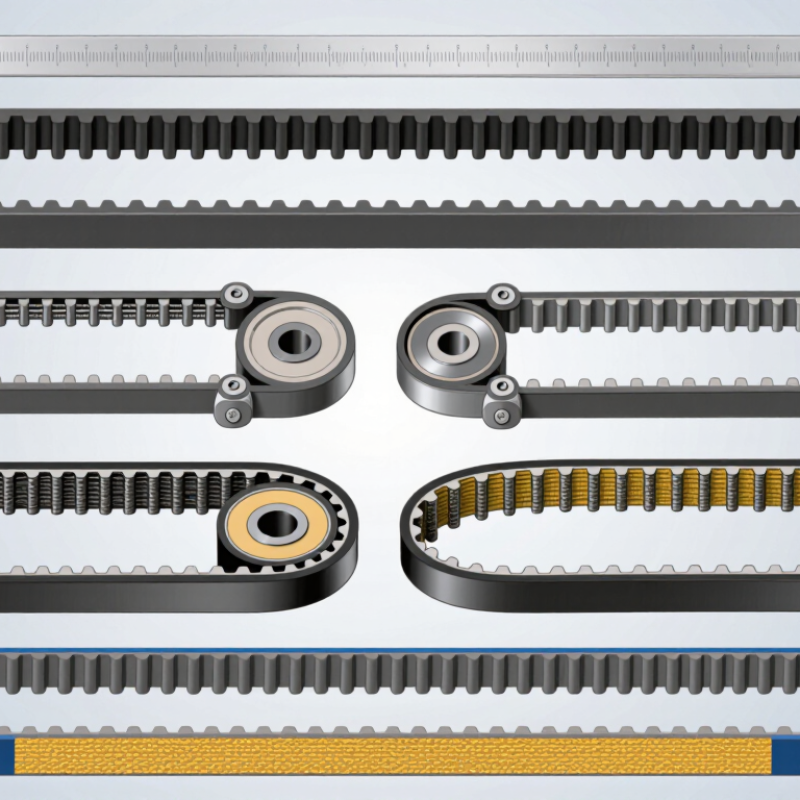
Polyurethane timing belts transmit motion through molded teeth and reinforced tensile cords. Their synchronized engagement reduces slip during indexing, conveying, and light automation. Compared with rubber belts, polyurethane often offers stronger resistance to oil, abrasion, and moisture. However, performance depends on tooth profile, belt width, cord material, and operating temperature.
A suitable belt should match the pulley geometry precisely. Even a small mismatch can create tooth wear, vibration, or uneven tracking. Harder polyurethane may improve load handling, but it can increase noise in some systems. Flexible belts suit smaller pulleys, while steel or aramid cords affect stretch, bending, and installation behavior. In maintenance reviews, incorrect tension remains a frequent failure cause. It is easy to blame the belt too quickly.
Tips: Check the working temperature, cleaning chemicals, pulley alignment, and expected load before choosing a belt. Measure the existing pitch and width carefully. Keep the belt clean and avoid forcing it over the pulley. A practical trial under real speed and load is valuable. Catalog data helps, but field conditions can disagree. Document early wear patterns, because they often reveal poor alignment or excessive tension.
The ranking starts with measurable performance, not catalog claims. Tooth shear strength, tensile load, pitch accuracy, and elongation deserve the highest weight. A belt that fits perfectly on day one may stretch under heat, dust, or repeated starts. ISO 13050 provides useful guidance for synchronous belt dimensions, while ASTM D412 supports tensile testing of elastomer compounds. These standards improve comparison, but they do not replace field evidence.
Material behavior also matters. Grand View Research estimated the global polyurethane market at approximately USD 78 billion in 2023, with continued growth driven by durable industrial applications. That expansion does not make every polyurethane belt equal. The top ten should be tested across operating temperatures, oil exposure, humidity, and abrasive dust. Noise levels, tooth wear, minimum pulley diameter, and splice consistency should be recorded. Small differences become expensive during continuous production.
Service life needs practical weighting. A 2024 industrial belts market analysis by MarketsandMarkets identifies automation and material handling as major demand areas, where downtime can quickly outweigh purchase price. Therefore, ranking should include installation time, replacement access, technical documentation, and lifecycle cost. Independent test data should outrank polished brochures. No ranking is perfect. I would also admit one weakness: published laboratory results rarely reproduce every factory condition. Global buyers should request application-specific trials before making a final decision.
Polyurethane timing belts differ greatly by design, even when their tooth profiles look similar. For global buyers, the right choice depends on load, speed, moisture, and installation space. Open-ended belts suit linear positioning and packaging equipment. Endless belts support continuous conveying with fewer joint concerns. High-torque profiles handle demanding drives. Double-sided belts transfer motion from both surfaces. Shorter belts often improve accuracy, but they may increase installation tension.
Application details matter. Cleated belts move cartons, trays, and food containers with controlled spacing. Coated belts protect delicate glass, labels, or electronic parts. Welded belts fit compact conveyors and quick replacement needs. Steel-cord versions resist stretch over long distances, while aramid-cord designs reduce weight and respond quickly. Oil-resistant polyurethane helps in workshops, although chemical compatibility still requires confirmation. Some belts perform poorly under heat.
I have seen buyers select a belt from tooth shape alone. That approach can fail. Measure pulley diameter, center distance, belt width, and expected peak load. Check whether the belt runs near water, abrasive dust, or cleaning agents. A quiet belt is not automatically a durable belt. Supplier documentation should state hardness, tolerance, cord material, and splice quality. Sample testing remains wise. Real machinery can expose weaknesses that catalogs hide.
| Rank | Belt Design | Pitch | Tooth Profile | Typical Widths | Common Cord Options | Primary Application | Key Selection Advantage | Typical Temperature Range |
|---|---|---|---|---|---|---|---|---|
| 1 | AT10 Polyurethane Belt | 10 mm | Metric trapezoidal, deep-tooth profile | 16–100 mm | Steel; aramid for lower mass | Packaging machines, linear positioning, conveyors | Good balance of load capacity, accuracy, and availability | Approximately −30 to +80 °C |
| 2 | AT5 Polyurethane Belt | 5 mm | Metric trapezoidal, compact profile | 10–50 mm | Steel; aramid for quiet operation | Small automation systems, labeling, light conveyors | Suitable for compact drives requiring accurate positioning | Approximately −30 to +80 °C |
| 3 | AT20 Polyurethane Belt | 20 mm | Metric trapezoidal, high-load profile | 25–150 mm | Steel; high-strength steel for heavy loads | Heavy-duty conveyors, robotic transfer axes, machine tools | High tooth shear resistance and strong torque transmission | Approximately −30 to +80 °C |
| 4 | T10 Polyurethane Belt | 10 mm | Metric trapezoidal, standard profile | 16–150 mm | Steel; stainless steel for corrosive environments | General industrial drives, indexing equipment, conveyors | Widely used metric profile with broad pulley compatibility | Approximately −30 to +80 °C |
| 5 | T5 Polyurethane Belt | 5 mm | Metric trapezoidal, compact profile | 10–50 mm | Steel; aramid for reduced inertia | Office equipment, small conveyors, textile and print machinery | Compact dimensions and smooth, precise motion | Approximately −30 to +80 °C |
| 6 | T20 Polyurethane Belt | 20 mm | Metric trapezoidal, heavy-duty profile | 25–150 mm | Steel; high-strength steel for high torque | Bulk handling, large conveyors, industrial transmission | Designed for higher transmitted loads and longer spans | Approximately −30 to +80 °C |
| 7 | XL Polyurethane Belt | 1/5 in (5.08 mm) | Inch trapezoidal, extra-light profile | 1/4–1 in | Steel; aramid in low-inertia drives | Light-duty instruments, compact automation, small rollers | Useful where inch-based pulleys and small belt widths are required | Approximately −30 to +80 °C |
| 8 | L Polyurethane Belt | 3/8 in (9.525 mm) | Inch trapezoidal, standard profile | 1/2–3 in | Steel; stainless steel for demanding environments | Industrial conveyors, material handling, general machinery | Established inch-series option for medium-load transmission | Approximately −30 to +80 °C |
| 9 | H Polyurethane Belt | 1/2 in (12.7 mm) | Inch trapezoidal, heavy-duty profile | 3/4–4 in | Steel; high-strength steel for heavy loads | Heavy conveyors, packaging lines, machine drives | Higher power capacity than smaller inch profiles | Approximately −30 to +80 °C |
| 10 | XH Polyurethane Belt | 7/8 in (22.225 mm) | Inch trapezoidal, extra-heavy-duty profile | 1–6 in | Steel; high-strength steel for maximum load | Large conveyors, high-torque industrial drives, bulk equipment | Large tooth engagement area for demanding torque transmission | Approximately −30 to +80 °C |
Note: Dimensions and temperature values are typical industry ranges for standard thermoplastic polyurethane timing belts. Actual load capacity, permissible speed, belt width, cord construction, and operating temperature depend on the belt manufacturer’s specification, pulley geometry, installation, and duty cycle.
Top 10 Polyurethane Timing Belts for Global Buyers
Comparing Materials, Profiles, Strength, and Operating Conditions
For global buyers, polyurethane timing belts should be judged by application, not appearance. Thermoplastic polyurethane offers clean running and strong abrasion resistance. Steel cords provide stable length for accurate indexing. Aramid cords reduce weight and handle repeated starts well. Neither option fits every machine.
To compare the top ten belt choices, check the tooth profile first. T-series profiles suit many standard drives, while AT and HTD profiles can carry higher torque. Match the belt pitch with the pulley precisely. A small mismatch can create vibration, tooth wear, and unexpected noise. Measure the center distance twice.
Operating conditions often decide the final selection. In humid rooms, moisture-resistant materials reduce swelling concerns. In oily areas, verify chemical compatibility instead of trusting a general label. High temperatures may harden the belt and shorten its service life. Cold conditions can reduce flexibility. Speed, load, pulley diameter, and tension must be reviewed together.
Field experience shows that over-tensioning is a common mistake. It may stop slippage briefly, but it can damage bearings. Regular inspection should check frayed cords, polished teeth, and uneven wear. A belt that looks strong may still fail under shock loads. I would also leave a small safety margin, although the correct margin depends on the manufacturer’s testing data and the machine’s duty cycle.
Comparing profiles, materials, strength classes, and operating conditions
The chart compares common polyurethane timing-belt profiles by representative continuous design speed. Steel-reinforced TPU belts generally provide higher dimensional stability and load capacity, while aramid-reinforced belts offer lower weight and better resistance to corrosion. Actual ratings depend on belt width, cord construction, pulley diameter, tooth engagement, temperature, lubrication, shock loading, and duty cycle.
| Profile | Nominal Pitch | Typical Construction | Typical Temperature Range | Common Application |
|---|---|---|---|---|
| HTD 5M | 5 mm | TPU with steel or aramid cords | -30°C to +80°C | Compact motion systems and robotics |
| T5 | 5 mm | TPU with steel cords | -30°C to +80°C | Light and medium-duty linear drives |
| AT5 | 5 mm | TPU with high-strength steel cords | -30°C to +80°C | Higher-load positioning systems |
| HTD 8M | 8 mm | TPU with steel or aramid cords | -30°C to +80°C | Industrial conveyors and automation |
| T10 | 10 mm | TPU with steel cords | -30°C to +80°C | General industrial transmission |
| AT10 | 10 mm | TPU with high-strength steel cords | -30°C to +80°C | High-load conveying and positioning |
| STD 8M | 8 mm | TPU with steel cords | -30°C to +80°C | Synchronous power transmission |
| HTD 14M | 14 mm | TPU with high-strength steel cords | -30°C to +80°C | Heavy-duty industrial drives |
| AT20 | 20 mm | TPU with high-strength steel cords | -30°C to +80°C | Large conveyors and heavy positioning axes |
| RPP 8M | 8 mm | TPU with steel or aramid cords | -30°C to +80°C | Low-noise automation equipment |
Selecting the right polyurethane timing belt starts with the application, not the catalogue. Define pitch, belt width, tooth profile, load, speed, and pulley dimensions. A small mismatch can cause vibration, tooth wear, or early failure. Check the tensile cord material carefully. Steel cords suit high pulling loads, while flexible alternatives may perform better around small pulleys.
Operating conditions matter just as much. Record temperature, humidity, oil exposure, cleaning chemicals, and dust levels. A belt used near heated equipment needs stable performance across temperature changes. In food, packaging, or medical machinery, request suitable material declarations and traceable production records. Do not rely on a generic “industrial grade” claim.
Sourcing requires more than comparing unit prices. Send suppliers a clear drawing, estimated annual volume, required tolerances, and inspection criteria. Ask for samples before approving mass production. Measure tooth pitch, belt length, width, hardness, and splice quality. Review test reports, batch identification, packaging, and replacement lead times. Real factories should explain their process, not only quote quickly.
A first specification is rarely perfect. Field feedback may reveal unexpected noise or tracking issues. Leave room for revision. Suppliers with documented quality controls and responsive technical support usually reduce long-term risk, even when their first quotation is not the lowest. Check shipping terms and import requirements before placing the order.
Record the load, speed, belt width, tooth profile, pulley diameter, and center distance. Small measurements matter.
Open-ended belts suit linear positioning, packaging equipment, and systems requiring adjustable lengths. They support controlled movement.
Endless belts fit continuous conveying applications and avoid many joint-related concerns. They can simplify operation.
Steel cords resist stretching under high pulling loads and long distances. Aramid cords weigh less and respond quickly around smaller pulleys.
Choose a double-sided design when motion must transfer from both belt surfaces. Check clearance carefully.
Cleats help space cartons, trays, and containers. Coatings can protect glass, labels, and electronic parts from rough contact.
Check exposure to water, oil, cleaning agents, dust, and temperature changes. Oil resistance alone does not prove chemical compatibility.
Request samples, hardness data, cord material, tolerances, splice details, and batch identification. Review test reports.
Not always. Compare inspection standards, replacement lead times, technical support, packaging, and shipping conditions. A cheap belt may cost more after early failure.
Real equipment may reveal vibration, tracking problems, noise, or tooth wear hidden by catalog information. The first specification may be imperfect.
This guide explains the essential features of a Polyurethane Timing Belt, including its material structure, tooth design, dimensional accuracy, wear resistance, flexibility, and ability to operate reliably under demanding conditions. It presents a practical ranking method based on load capacity, transmission efficiency, service life, noise control, temperature tolerance, chemical resistance, and suitability for different industrial applications. The top ten options are organized by design and use, helping readers understand how belt profiles, reinforcing materials, tooth forms, and construction methods affect performance.
The comparison also examines strength, operating speed, environmental conditions, maintenance requirements, and compatibility with various drive systems. For global buyers, the final selection should consider application demands, installation space, expected operating cycles, total ownership cost, quality consistency, technical support, and supply reliability. By evaluating these factors systematically, buyers can select and source a Polyurethane Timing Belt that delivers dependable synchronization, efficient power transmission, and long-term value across manufacturing, automation, packaging, and other precision-driven applications.
