 Huishi
A Pvc Belt Conveyor is a continuous material-handling system built around a flexible polyvinyl chloride belt. The belt travels over powered rollers or a driven pulley. It carries products from one point to another at a controlled speed. Typical components include the belt, frame, motor, gearbox, idlers, tensioning unit, and emergency stop controls. Each part affects performance.
David J. Alspaugh, a recognized conveyor engineer and author, has stated, “A conveyor system is only as reliable as its weakest component.” That observation deserves attention. A strong PVC belt cannot compensate for poor tracking, overloaded rollers, or careless installation. In real facilities, dust gathers beneath the frame, packages shift near transfer points, and small alignment errors become visible through uneven belt wear. Practical experience matters here.
The working principle is straightforward. The motor turns the drive pulley, and friction moves the belt forward. Materials rest on the carrying surface while the return side travels underneath. Operators can adjust speed, belt width, incline, and side guides for different loads. PVC belts are often selected for cleanability, flexibility, and resistance to many workplace conditions. They are not perfect, though. Excessive heat, sharp edges, heavy impact, or unsuitable chemicals may shorten their service life. A reliable design therefore begins with the material, environment, load pattern, and cleaning routine. This guide examines those decisions clearly, while recognizing one uncomfortable truth: simple equipment still demands careful engineering.
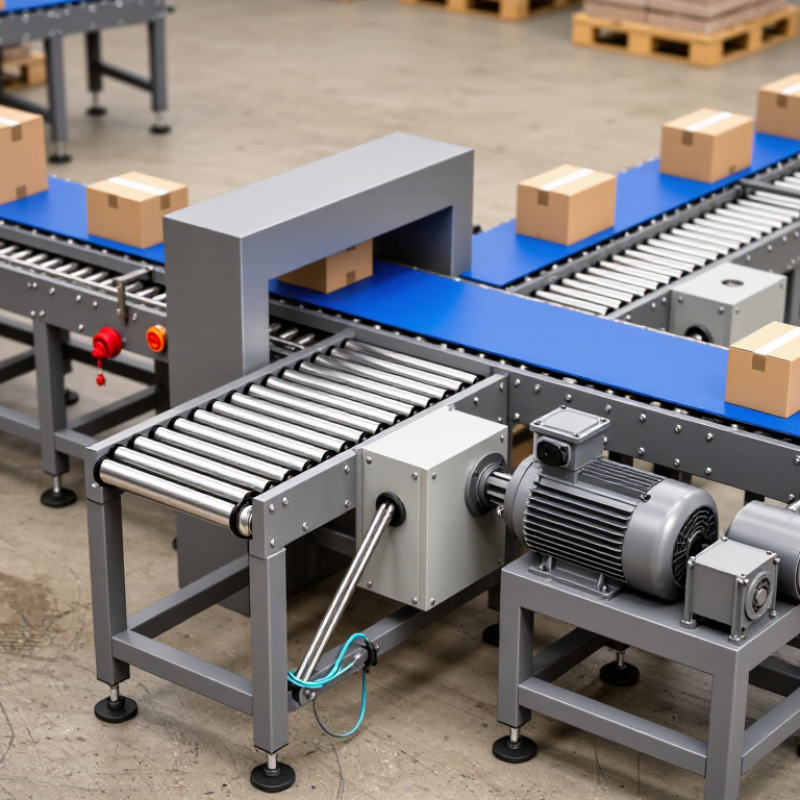
A PVC belt conveyor is a powered material-handling machine with a flexible belt made from polyvinyl chloride. The belt usually runs over a metal frame, support rollers, and two main pulleys. One pulley receives power from an electric motor, while the other guides the belt back. This arrangement moves products steadily between workstations, packing areas, or storage zones. PVC belts are popular because they are lightweight, resistant to moisture, and easy to clean. They can carry cartons, food containers, parcels, and small components.
The working process is straightforward. The motor turns the drive pulley, and friction pulls the belt forward. Items placed on the upper surface travel at a controlled speed. A tensioning system keeps the belt from slipping or wandering. In real installations, alignment matters more than many people expect. A slightly uneven frame can create edge wear, noise, or product movement. Belt speed, load weight, incline angle, and surface texture must match the application. PVC is useful, but it is not suitable for every temperature or chemical environment. That limitation deserves attention.
Tips: Check belt tracking during operation. Keep the surface free from sharp debris. Inspect pulleys, rollers, and emergency stops regularly. Avoid overloading the belt, even briefly. A practical inspection log helps reveal small problems before they become expensive repairs.
| Data Dimension | Typical Information | How It Relates to Operation |
|---|---|---|
| Basic Definition | A continuous conveyor that uses a PVC-coated belt to transport materials. | The belt forms the moving surface that carries products from one point to another. |
| Main Belt Material | Polyvinyl chloride (PVC) covering over a fabric reinforcement layer. | The PVC surface provides flexibility, abrasion resistance, and a relatively easy-to-clean conveying surface. |
| Core Components | Belt, drive pulley, tail pulley, support rollers or slider bed, frame, motor, and tensioning system. | Each component supports, guides, tensions, or powers the belt loop. |
| Drive Principle | An electric motor rotates the drive pulley, which moves the belt through friction. | The belt travels continuously while the pulleys guide its return path. |
| Common Belt Widths | Approximately 300–1,200 mm for many light- and medium-duty applications. | The required width depends on product dimensions, loading pattern, and desired throughput. |
| Typical Speed Range | About 0.1–1.5 m/s, depending on the conveyor design and material being handled. | A variable-speed drive can adjust movement to suit product handling, inspection, or packing tasks. |
| Typical Load Type | Packages, cartons, bags, finished goods, food items, and light bulk materials. | The flat belt supports products continuously and helps maintain a controlled flow. |
| Incline Capability | Often used on modest inclines; cleats or a textured surface may be added when products could slide. | The belt surface and conveyor angle determine whether products remain stable during elevation changes. |
| Temperature Suitability | Common PVC belts are generally used around 0°C to 80°C; the exact range depends on belt construction. | Operating outside the belt’s rated temperature range can reduce flexibility, strength, and service life. |
| Hygiene and Cleaning | The smooth surface is comparatively easy to wipe and clean when the belt design is suitable for the application. | Regular cleaning helps reduce residue buildup and supports orderly material handling. |
| Energy Consumption | Commonly powered by a small geared electric motor, with power requirements based on load, length, and speed. | Reducing friction, correct belt tension, and avoiding overloading can improve energy efficiency. |
| Advantages | Quiet operation, smooth product movement, flexible layout options, and relatively simple maintenance. | These characteristics make PVC belt conveyors practical for many production and distribution environments. |
| Limitations | Not ideal for extremely hot materials, sharp heavy loads, or applications requiring very high impact resistance. | The belt construction and operating conditions should be checked before selecting the conveyor. |
| Routine Maintenance | Inspect belt tracking, tension, pulley condition, fasteners, motor operation, and accumulated debris. | Preventive checks help minimize belt drift, slippage, unexpected downtime, and premature wear. |
It is a powered machine with a flexible PVC belt. The belt carries products across a metal frame between work areas.
An electric motor turns the drive pulley. Friction pulls the belt forward at a controlled speed.
It can carry cartons, food containers, parcels, and small components. Product weight and surface shape still matter.
Key parts include the belt, motor, drive pulley, return pulley, rollers, frame, and tensioning unit. Sensors and side guides may also help.
Poor alignment can cause edge wear, noise, and product movement. A slightly uneven frame may create problems quickly.
Low tension can cause slipping. Excessive tension increases stress on bearings and other components.
No. PVC may perform poorly under extreme temperatures or harsh chemical conditions. The application needs careful review.
Check belt tracking during operation and remove sharp debris promptly. Inspect rollers, pulleys, and emergency stops regularly.
Avoid overloading, even briefly. Record inspections and investigate unusual noise before it becomes a larger problem.
Not always. Load, moisture, temperature, and cleaning conditions may require different schedules. Calendar-only planning can be a poor guess.
A Pvc Belt Conveyor is a material-handling system that uses a continuous polyvinyl chloride belt to move products, packages, or loose materials efficiently between locations. Its main components include the belt, frame, drive motor, pulleys, rollers, tensioning device, and control system. Each part supports stable movement, accurate tracking, and safe operation. The belt surface can be selected according to load type, grip requirements, and working conditions.
During operation, the motor rotates the drive pulley, which moves the belt along the conveyor frame while rollers support its load. Materials are placed on the loading section, transported at a controlled speed, and discharged at the destination. Common configurations include straight, inclined, curved, cleated, and modular layouts, allowing conveyors to fit different production spaces. They are widely used in packaging, food processing, warehousing, assembly, and sorting operations. Key benefits include smooth transport, flexible design, reduced manual handling, and easy integration. Regular cleaning, belt inspection, tension adjustment, and lubrication help maintain performance and extend service life.
