
Huishi Huishi

Top Transmission Belts Manufacturers for Global Buyers

Time:2026-09-15 Author:Isabella
0%

Choosing reliable Transmission Belts manufacturers requires more than comparing catalog prices. Global buyers must examine belt construction, production capacity, quality controls, and long-term service. A belt may look identical on a website, yet perform differently under heat, oil, dust, or continuous tension. Small details matter.

This guide introduces leading manufacturers serving international markets. It considers their experience, technical expertise, product range, testing practices, and distribution capabilities. Key products may include synchronous belts, V-belts, ribbed belts, and industrial conveyor solutions. Buyers should review material specifications, dimensional tolerances, temperature ratings, and traceability records before placing large orders. Certification can support confidence, but it does not replace sample testing in real equipment.

Fit matters most.

The evaluation also considers communication speed, packaging quality, spare-part availability, and after-sales support. A dependable supplier should explain lead times clearly and provide consistent technical documents. Export experience is valuable, especially when shipments cross several regions and require careful protection from moisture or deformation. However, no shortlist is flawless. Market rankings can change as factories expand, raw-material costs move, or quality systems weaken. A low quote may hide limited testing or unstable delivery.

Readers should treat this overview as a practical starting point, not a final purchasing decision. Compare several suppliers, request recent test reports, and confirm performance with application-specific trials. A manufacturer that performs well in automotive belts may not suit heavy mining equipment. Careful verification remains essential.
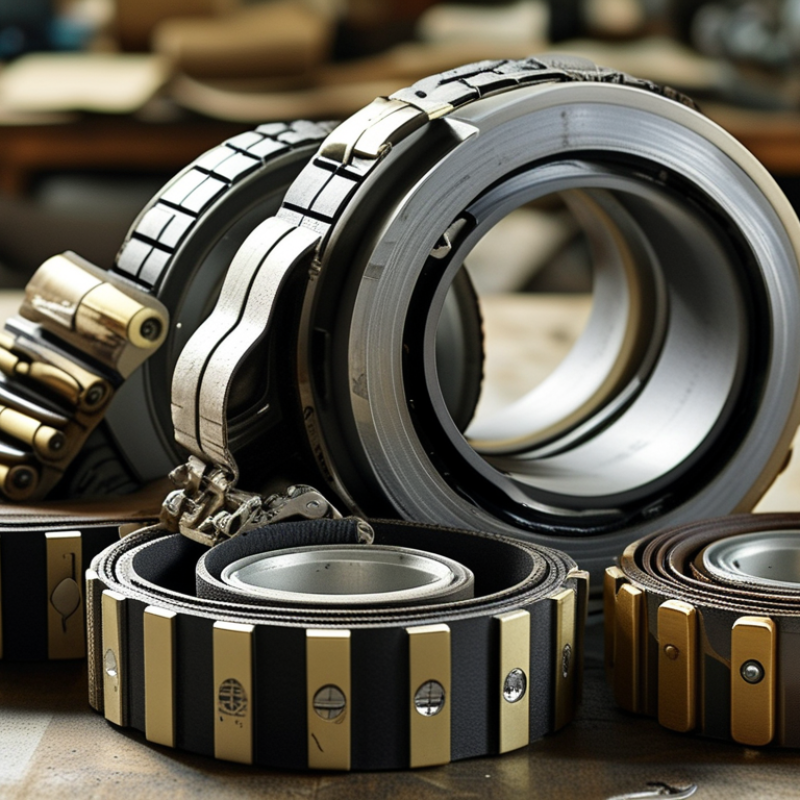
Top Transmission Belts Manufacturers for Global Buyers

Types of Transmission Belts and Their Industrial Applications

Top Transmission Belts Manufacturers for Global Buyers

Industrial transmission belts vary widely in design and operating behavior. V-belts remain common in pumps, fans, compressors, and agricultural machinery. Their wedge shape transfers torque through friction. Synchronous belts use molded teeth and timing pulleys. They suit robotics, packaging lines, machine tools, and precision conveyors. Flat belts support high-speed drives and long center distances. Ribbed belts combine flexibility with strong power transfer. Each type solves a different mechanical problem.

The U.S. Department of Energy reports that synchronous belt drives can achieve about 97–98% efficiency when correctly tensioned. This matters in continuously operating equipment, where small losses become expensive. A 2024 Fortune Business Insights report valued the global conveyor belt market at roughly USD 5.5 billion in 2023. Its growth reflects expanding mining, logistics, food processing, and manufacturing demand. However, conveyor belts and power transmission belts face different loads. Buyers should not treat them as interchangeable. I have seen failures caused by ignoring pulley alignment, not belt quality.

Tips: Check torque, speed, temperature, dust, and chemical exposure before selection. Measure pulley dimensions carefully. Verify tension with a gauge, rather than relying on touch. Synchronous belts need accurate alignment. V-belts need matching sets when used in multiple-drive systems. A quieter drive is not always a better drive. Maintenance records should include cracks, glazing, tooth wear, and unusual vibration. Supplier test reports, material specifications, and traceable quality certificates improve purchasing reliability.

Top Transmission Belts Manufacturers for Global Buyers - Types of Transmission Belts and Their Industrial Applications

Transmission Belt Type Typical Construction Primary Power-Transmission Feature Common Industrial Applications Main Advantages Important Selection Considerations
Classical V-Belts Trapezoidal rubber belt with embedded tensile cords and a protective outer wrap. Transfers torque through wedging action between the belt sides and grooved pulleys. Pumps, fans, compressors, machine tools, agricultural machinery, and general factory drives. Widely available, economical, tolerant of moderate shock loads, and simple to install. Correct profile, belt length, pulley groove condition, center distance, and tension must be verified.
Narrow V-Belts Compact V-belt profile with high-strength tensile cords and rubber compression material. Provides higher power capacity per unit belt width than many classical profiles. Industrial blowers, conveyors, mixers, compressors, generators, and compact drive systems. Space-saving design, good speed capability, and efficient power transmission. Pulley alignment and the matching narrow-profile sheaves are essential for service life.
Cogged V-Belts V-belt with molded notches on the inner surface to improve flexibility. Bends around smaller pulleys more easily than a wrapped, smooth belt of the same profile. Automotive auxiliary drives, HVAC equipment, compact pumps, woodworking machines, and industrial motors. Improved flexibility, reduced bending losses, and suitability for smaller pulley diameters. Notches should remain free from debris; the belt must match the specified pulley profile.
Synchronous or Timing Belts Toothed belt with molded teeth, reinforcing cords, and a durable elastomer or polyurethane body. Positive engagement with toothed pulleys prevents normal slip and maintains timing. Robotics, packaging machines, textile equipment, printing presses, CNC machinery, and engine timing systems. Accurate synchronization, clean operation, high repeatability, and low maintenance. Tooth pitch, tooth profile, belt width, pulley compatibility, pretension, and contamination control are critical.
Poly-V or Ribbed Belts Thin continuous belt with multiple longitudinal ribs that run in matching pulley grooves. Combines the flexibility of a flat belt with the traction of multiple V-shaped ribs. Automotive accessory drives, household appliances, conveyors, textile machinery, and compact industrial equipment. Compact layout, smooth running, low vibration, and the ability to drive multiple accessories. Rib count, rib profile, belt length, pulley alignment, and reverse-bending requirements should be checked.
Flat Belts Flat flexible belt made from rubber, polyurethane, leather, or layered synthetic materials. Uses friction on relatively flat or crowned pulleys and can transmit power over longer center distances. Roller conveyors, packaging lines, textile machinery, distribution systems, and light-duty material handling. Quiet operation, high flexibility, long-center-distance capability, and easy routing. Pulley crowning, belt tracking, joint quality, surface friction, and contamination must be controlled.
Variable-Speed Belts Wedge-shaped belt designed to run between adjustable-diameter sheaves. Changes the effective pulley ratio to provide continuously adjustable output speed. Variable-speed drives, machine tools, agricultural equipment, conveyors, and process machinery. Mechanical speed adjustment, smooth starting, and flexible process control. Sheave condition, adjustment range, belt width, operating load, and correct belt seating are important.
Link V-Belts Interlocking polyurethane or elastomer links assembled to the required working length. Allows rapid installation without dismantling shafts or major drive components. Emergency maintenance, HVAC systems, workshop machinery, agricultural equipment, and hard-to-access drives. Fast replacement, adjustable length, reduced downtime, and convenient field servicing. Link orientation, connection quality, tension, and compatibility with the existing pulley profile must be confirmed.
Double-Sided V-Belts Symmetrical belt with V-shaped driving surfaces on both sides and central tensile reinforcement. Can transmit power from both belt faces in serpentine or multi-shaft arrangements. Agricultural machinery, compact power units, conveyors, and drives with multiple shafts. Efficient use of limited space and the ability to operate several pulleys from one belt. All pulleys must be correctly aligned, and the belt profile must match every grooved pulley.
High-Temperature or Oil-Resistant Belts Specially formulated elastomer compounds with reinforced cords and protective coverings. Maintains flexibility and dimensional stability in demanding thermal or oily environments. Machine tools, oil pumps, engines, compressors, foundry equipment, and industrial processing lines. Improved resistance to heat, mineral oils, abrasion, or demanding industrial exposure, depending on compound. The exact chemical exposure, temperature range, belt profile, safety requirements, and manufacturer material specification must be evaluated.
Global Buyer Checklist: Confirm belt type, cross-section or tooth profile, effective length, width, pulley dimensions, center distance, operating speed, transmitted power, ambient temperature, chemical exposure, installation method, and applicable technical requirements before ordering.

Key Criteria for Evaluating Global Transmission Belt Manufacturers

Choosing transmission belt manufacturers requires more than comparing price lists. The U.S. Department of Energy’s 2022 Motor Systems Market Assessment reports that motor-driven equipment consumes about 46% of U.S. manufacturing electricity. Small efficiency losses can therefore become expensive across thousands of operating hours. Ask manufacturers for measured power-loss data, belt-life testing, and tension guidance. Vague claims are not enough.

Standards provide a stronger filter. Check whether products follow relevant requirements, such as ISO 1813 for belt electrical conductivity and ISO 4184 for classical V-belts. Request traceable test reports, material specifications, and batch records. A capable supplier should explain rubber compound selection, cord construction, temperature limits, and resistance to oil or dust. I have seen attractive samples fail early because the operating environment was described poorly.

Production capacity also matters. Grand View Research’s 2024 industrial belts analysis identifies replacement demand and industrial automation as important market drivers. That means continuity deserves practical questions: What is the normal lead time? Are critical sizes stocked? Can the supplier maintain identical dimensions across batches? The International Energy Agency reported that industry used roughly 37% of global final energy in 2022. Efficiency claims should be checked against real load conditions, not showroom demonstrations. A factory audit, sample trial, and failure review may feel slow. It is still cheaper than discovering weak adhesion after installation. Suppliers should welcome this scrutiny, although some will not.

Leading Transmission Belt Manufacturers by Product Specialization

Top Transmission Belts Manufacturers for Global Buyers

Leading Transmission Belt Manufacturers by Product Specialization

Transmission belt manufacturers often build their expertise around specific applications. Timing belt specialists focus on accurate tooth profiles, stable pitch, and low backlash. Their products suit robotic drives, packaging lines, and precision conveyors. Buyers should request pitch data, tensile strength, and temperature limits before ordering.

V-belt manufacturers serve pumps, fans, compressors, and agricultural machinery. They typically offer wrapped, raw-edge, narrow, and variable-speed designs. A reliable supplier should provide compound details, pulley compatibility, and belt-length tolerances. Small dimensional errors can create vibration, heat, and early wear. That is not a minor issue.

Conveyor belt producers concentrate on high-load transport, abrasion resistance, and joint performance. Flat belt manufacturers often support logistics, food processing, and light conveying equipment. Polyurethane specialists provide cleanable belts for moderate-load systems and precise product handling. Some manufacturers also produce custom belts with coatings, guides, holes, or welded profiles.

Global buyers need more than a product catalog. They should examine production equipment, inspection records, material traceability, and sample-testing procedures. Certificates help, but they do not replace practical verification. A supplier may meet a published standard while missing a machine’s real operating conditions. This remains an easy mistake. Share speed, torque, pulley dimensions, load cycles, and working temperature before approving a bulk order. Suppliers with clear engineering communication usually reduce costly revisions and installation delays.

Quality Standards, Materials, and Manufacturing Capabilities

Top Transmission Belts Manufacturers for Global Buyers

Reliable transmission belt manufacturers are judged by repeatable quality, not attractive certificates alone. Buyers should request dimensional reports, tensile test results, and batch traceability. ISO 9001 certification supports process control, but it does not guarantee every belt performs well. Groove accuracy matters. A small profile error can create vibration, noise, and uneven pulley wear.

Material selection depends on the working environment. Neoprene belts suit many general industrial drives, while EPDM handles heat and weather more effectively. Polyurethane belts offer clean operation and strong abrasion resistance. Polyester cords provide flexibility, while aramid cords support high-load applications with limited stretch. Oil, dust, temperature, speed, and pulley diameter should guide the specification. Guessing here is expensive.

Strong manufacturers combine material expertise with controlled production. Useful capabilities include rubber compounding, cord treatment, precision molding, tooth grinding, splicing, and automated visual inspection. Test laboratories should measure elongation, fatigue life, adhesion, and resistance to heat or oil. Ask how samples are stored and how failed batches are investigated. A factory may have modern equipment, yet weak documentation can still create uncertainty. I have found that clear inspection records often reveal more than a polished factory tour. Some suppliers also need better communication about tolerances and realistic service life. That weakness deserves attention before volume production begins.

How Global Buyers Can Select the Right Transmission Belt Supplier

Top Transmission Belts Manufacturers for Global Buyers

Global buyers should assess suppliers through operating evidence, not catalog claims. A familiar product range is not enough. Start with transmitted power, shaft speed, center distance, temperature, dust, and oil exposure.

The U.S. Department of Energy’s Industrial Motor Systems Market Assessment reports that motor-driven systems consume roughly 69% of industrial electricity. Small belt losses can therefore create significant operating costs. Ask suppliers for measured slip, tension, service life, and test methods.

A capable manufacturer should provide dimensional tolerances, compound data, batch traceability, and installation guidance. Check whether dimensions follow ISO 4184, while antistatic performance may reference ISO 1813. Request samples from the same production line, rather than showroom stock. Then test them under real loads.

Look beyond unit price. Compare failure rates, replacement intervals, delivery consistency, and technical response time.

For cross-border sourcing, verify country of origin, customs documents, packaging dimensions, and warranty terms. The World Bank’s 2023 Logistics Performance Index evaluates customs, infrastructure, shipment arrangements, logistics competence, tracking, and timeliness. These categories help buyers test service claims with evidence.

A scorecard still misses things. Belt noise after a cold start, uneven edge wear, or a delayed sample may reveal more than a brochure. Leave room for doubt, document failures, and requalify suppliers after process changes.

FAQS

How do V-belts and synchronous belts differ?

V-belts transmit torque through friction. They suit pumps, fans, compressors, and agricultural machinery. Synchronous belts use molded teeth for accurate timing. Alignment must be precise.

When are flat or ribbed belts suitable?

Flat belts support high-speed drives and long center distances. Ribbed belts combine flexibility with strong power transfer. Check speed, load, pulley size, and operating space.

Are conveyor belts interchangeable with transmission belts?

No. Conveyor belts carry materials and face different loads. Transmission belts transfer mechanical power between pulleys. Treating them alike can cause early failure.

How efficient can synchronous belt drives become?

Correctly tensioned synchronous drives may reach about 97–98% efficiency. This matters in continuously operating equipment. Poor alignment reduces that advantage. The figure is not a guarantee.

What should buyers check before selecting a belt?

Check torque, speed, temperature, dust, oil, chemicals, and pulley dimensions. Measure carefully. Use a tension gauge, not touch. Multiple V-belts need matched sets.

Which materials suit different working environments?

Neoprene suits many general industrial drives. EPDM handles heat and weather more effectively. Polyurethane offers clean operation and abrasion resistance. Polyester cords add flexibility. Aramid cords reduce stretch under heavy loads.

How can buyers assess a manufacturer’s quality?

Request dimensional reports, tensile results, material specifications, and batch traceability. Certification supports process control but cannot prove every belt performs well. Paperwork helps. It is not enough.

Which production and testing capabilities matter?

Look for rubber compounding, cord treatment, precision molding, tooth grinding, splicing, and visual inspection. Testing should cover elongation, fatigue, adhesion, heat, and oil resistance. Ask how failed batches are investigated.

What maintenance signs suggest belt problems?

Inspect cracks, glazing, tooth wear, unusual vibration, noise, and uneven pulley wear. Keep maintenance records. A small profile error can create costly damage. I would not trust touch alone.

Conclusion

Transmission Belts are essential components in power transmission systems across manufacturing, agriculture, automotive, logistics, mining, and other industrial sectors. This overview explains the main belt types, including timing, V-belts, synchronous, flat, and specialized high-performance designs, while highlighting their typical applications. It also outlines the key factors global buyers should consider when evaluating manufacturers, such as product range, engineering expertise, production capacity, consistency, customization options, delivery reliability, and technical support.

The article further examines how materials, construction methods, testing procedures, and recognized quality standards influence belt durability, efficiency, noise control, temperature resistance, and service life. To select the right supplier, buyers should compare application requirements, operating conditions, certification, quality assurance systems, communication efficiency, lead times, and after-sales support. A careful evaluation process helps businesses secure dependable products, reduce maintenance risks, and build stable long-term supply relationships.

Isabella

Isabella

Isabella is a dedicated marketing professional with a sharp focus on driving brand growth and engagement through strategic content creation. With an extensive background in digital marketing, she combines her passion for storytelling with her keen understanding of industry trends to deliver......