
Huishi Huishi

How to Choose the Right Pu Timing Belt for Global Sourcing?

Time:2026-09-30 Author:Oliver
0%

Choosing the Right Pu Timing Belt for Global Sourcing

Selecting a Pu Timing Belt for international procurement requires more than comparing unit prices. The wrong belt can create tooth wear, tracking problems, production stoppages, and expensive replacement delays. A practical choice begins with the application. Check torque, speed, pulley diameter, center distance, operating temperature, and working environment. Oil, dust, moisture, and cleaning chemicals can change belt performance.

“Reliability starts with matching the belt construction to the machine’s real operating conditions,” says Dr. Robert G. Budynas, a respected mechanical design authority. His view reflects an important sourcing lesson: specifications should guide supplier discussions, not marketing claims. Polyurethane hardness, tooth profile, belt width, steel or aramid tensile cords, and pitch must match the drive system. A belt may look identical in photographs yet perform differently under load.

Small details matter. Ask for material certificates, dimensional tolerances, batch traceability, and test data. Confirm whether the supplier can maintain consistent pitch across repeated orders. Review sample belts under realistic conditions, including start-stop cycles and maximum tension. Do not ignore packaging. A crushed belt or prolonged exposure to heat can arrive damaged before installation.

Global sourcing is not always simple. Lead time, minimum order quantity, technical communication, and after-sales support can outweigh a low quotation. I have seen buyers focus too heavily on price and regret it later. That mistake is avoidable, though not always. Supplier audits, clear drawings, and written acceptance criteria create stronger protection. This guide explains how to compare suppliers, verify belt quality, and choose a Pu Timing Belt that supports dependable production across borders.
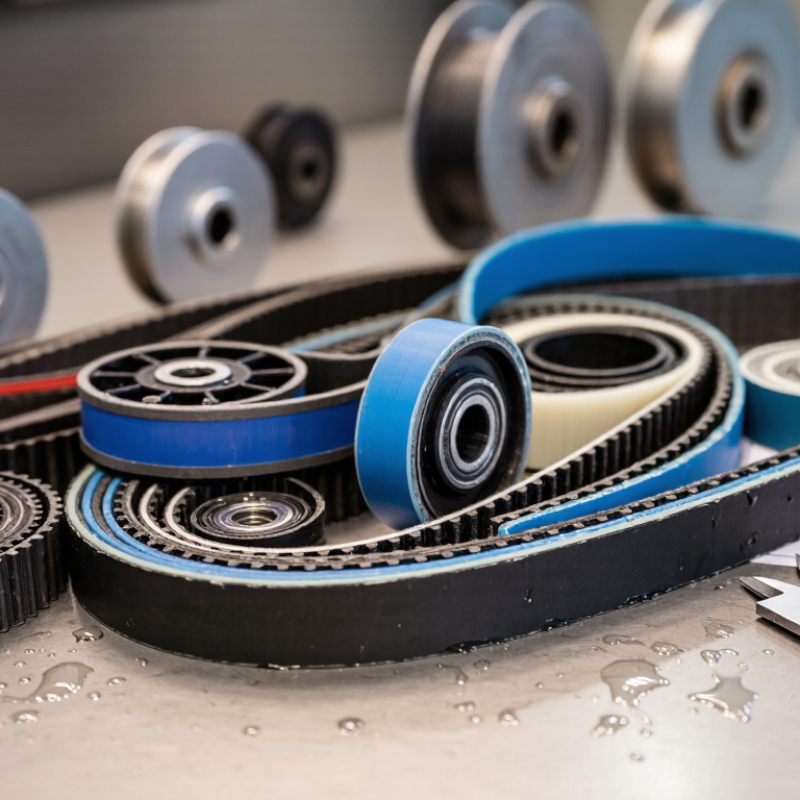
How to Choose the Right Pu Timing Belt for Global Sourcing?

Understanding PU Timing Belt Materials and Construction

How to Choose the Right Pu Timing Belt for Global Sourcing?

Polyurethane timing belts combine a wear-resistant body with embedded tensile cords. The polyurethane carries the teeth and resists oil, moisture, and abrasion. Steel cords usually provide dimensional stability over long spans. Aramid cords offer lower weight and better flexibility, but may stretch differently under load. Tooth shape and pitch also matter. A five-millimeter pitch cannot replace a ten-millimeter pitch without changing pulley geometry.

According to Grand View Research’s 2024 polyurethane market assessment, Asia-Pacific remains the largest regional market for polyurethane demand. That trend supports wider supplier access, but quality can vary between factories. Request material hardness, cord construction, pitch tolerance, tensile strength, and operating-temperature data. ISO 5296 provides dimensional guidance for synchronous belts and pulleys, while ISO 9001 certification can support process reliability. Certification alone is not proof of belt performance.

Mordor Intelligence reports that industrial automation continues to expand through investments in machinery and production efficiency. This increases demand for accurate, low-maintenance power transmission. Yet a belt selected only by width may fail early. In practical sourcing, inspect tooth edges, splice quality, belt surface, and pulley fit. Ask for batch test records, not only a polished datasheet. A datasheet can still hide variation. I would also test one sample under real load, because laboratory figures may not reflect dust, heat, or repeated starts.

How to Choose the Right PU Timing Belt for Global Sourcing?

Typical tensile-strength ranges vary with thermoplastic polyurethane hardness. Softer PU grades generally provide better flexibility and abrasion resistance, while harder grades usually offer higher tensile strength and dimensional stability. Final belt selection should also consider cord construction, operating temperature, chemical exposure, tooth profile, and required transmission load.

Matching Belt Dimensions to Drive System Requirements

Choosing a PU timing belt starts with the drive, not the catalogue. In sourcing projects, I measure the installed system before reviewing supplier options. Record pitch, tooth count, belt length, width, and tooth profile before contacting suppliers. A one-millimeter error can shift pulley alignment and increase edge wear. Measure center distance under realistic tension. Do not rely on a worn belt alone. Its length may have changed through service.

Match belt dimensions to pulley teeth exactly. A belt with the wrong pitch may appear compatible, yet it can skip under load. Check pulley face width, flange clearance, shaft spacing, and minimum pulley diameter. Then compare the belt’s rated tensile strength with starting torque and peak load. For vertical or reversing drives, pay extra attention to tension and tooth engagement. Temperature, oil mist, moisture, and abrasive dust also influence PU belt selection. I have seen technically correct dimensions fail because the working environment was treated as an afterthought.

Ask for tolerance data, material details, and inspection records, not only a sample photograph. Confirm whether the supplier controls belt length, tooth geometry, joint quality, and width during production. Request a trial belt and test it at operating speed, load, and temperature. Record noise, tracking, tension loss, and pulley wear. Small checks reveal expensive problems. One judgment can still be wrong. Recheck the drawing against the installed drive before placing a global order.

How to Choose the Right PU Timing Belt for Global Sourcing? - Matching Belt Dimensions to Drive System Requirements

Drive-System Requirement Dimension or Specification to Check How to Match the Belt Global Sourcing Verification
Existing pulley tooth geometry Tooth profile and pitch, measured in millimetres Match the belt to the pulley profile and pitch. Common metric profiles include T5 and AT5 at 5 mm pitch, and T10 and AT10 at 10 mm pitch. Profiles with the same pitch are not necessarily interchangeable because tooth shape differs. Request the exact profile designation and a dimensional drawing. Confirm compatibility with the existing pulley rather than relying on pitch alone.
Required belt width Belt width, measured in millimetres Choose a width supported by the drive load, pulley face width, and available installation clearance. The belt must run fully on the pulley without rubbing adjacent components. Check the supplier’s available widths for the selected profile and confirm dimensional tolerances before ordering.
Required belt length Pitch length and number of belt teeth For a toothed belt, pitch length is the belt tooth count multiplied by the belt pitch. Select a length that suits the pulley diameters and required centre distance; calculate the drive geometry before finalizing the order. Confirm whether the quoted length is pitch length and ask how length is measured. Do not compare listings that use different length conventions without clarification.
Pulley size and speed ratio Pulley tooth counts and pitch diameter Use pulleys with a matching tooth profile and pitch. The speed ratio for a synchronous drive is determined by the pulley tooth-count ratio; verify pulley tooth counts and available wrap around the smaller pulley. Include pulley tooth counts and drawings in the request for quotation so belt and pulley compatibility can be checked together.
Load, acceleration, and duty cycle Transmitted power or torque, rotational speed, starts and stops, and operating hours Use the drive manufacturer’s calculation method to determine belt width and minimum pulley size. Dynamic loads and frequent starts may require a different selection from a steady, lightly loaded drive. Provide operating data and request the supplier’s selection assumptions, allowable load information, and any service-factor basis.
Installation and tension adjustment Centre distance, adjustment range, and installation method Check that the proposed belt length can be installed and tensioned with the available adjustment. Avoid forcing a belt over a pulley, which can damage belt teeth or tensile members. Share the centre-distance range and installation constraints. Confirm the recommended tensioning procedure for the belt construction.
Operating environment Temperature, moisture, oils, chemicals, dust, and cleaning method Specify the actual environment when choosing belt material and any coating or backing. Resistance varies by polyurethane formulation and belt construction; do not assume every PU belt suits every chemical or temperature range. Request documented operating limits and compatibility information for the specific belt specification and exposure conditions.
Backside contact or conveying use Backside profile, thickness, and any coating or cleat dimensions If the belt runs against a backside roller or carries products, confirm that the backing and added features fit the application without interfering with pulley engagement or clearance. Request a cross-section drawing and confirm feature dimensions, placement, and tolerances for the complete belt assembly.
Repeat orders and incoming inspection Profile, pitch, width, length, tooth count, construction, and tolerances Specify the complete belt description rather than ordering by a general name alone. Keep a drawing or approved sample as the reference for repeat purchases. Agree on inspection points, packaging, traceability, and change notification requirements before placing a production order.

Note: Profile availability, dimensions, tolerances, and load ratings vary by belt construction and supplier. Verify the final specification against the drive design and supplier documentation.

Selecting Tooth Profiles, Cords, and Surface Configurations

Choosing a PU timing belt for global sourcing starts with the application, not the catalog image. In my experience, tooth profile affects engagement, noise, and load transfer. A fine-pitch profile suits compact indexing and smaller pulleys. A larger profile handles higher torque, but it needs more installation space. Check pulley compatibility carefully. Mixing profiles can cause uneven wear and inaccurate positioning.

Cord selection affects tensile stability, flexibility, and long-term tracking. Steel cords resist stretch and support precise synchronization. Aramid cords reduce weight and tolerate repeated bending, yet they may need careful tension control. Flexible applications need a cord that survives frequent starts, stops, and reverse motion.

Surface configuration should match the conveyed material and working environment. Smooth backs work well with guide surfaces. Rough or coated backs improve grip on inclined conveyors, but added friction can increase heat. Perforations, flights, and special covers may improve handling, though they complicate cleaning and replacement.

This is where specifications are often incomplete. Ask for measured friction, hardness, and temperature data.

Tips: Compare the belt, pulley, and tensioner as one system. Confirm pitch, width, cord type, temperature range, and minimum pulley diameter. Request samples when surface grip matters. Record actual noise and tracking after installation. A drawing can miss real behavior. No selection is perfect. Allow room for testing, adjustment, and honest review.

Evaluating Operating Conditions and Performance Factors

How to Choose the Right PU Timing Belt for Global Sourcing?

Evaluating Operating Conditions and Performance Factors

Choosing a polyurethane timing belt starts with its working environment, not its catalog dimensions. Record temperature, humidity, dust, oil exposure, speed, and daily running hours. A belt near a hot motor may face different stress from one inside a clean packaging machine. Small details matter.

Check the load profile carefully. Repeated starts, sudden stops, and reverse movement can damage teeth before visible wear appears. Match the belt pitch, width, tooth shape, and tensile cord to the pulley system. Steel cords suit high tensile loads, while aramid cords can reduce weight and improve flexibility. Do not select hardness by habit. A harder belt may resist abrasion, but it can transmit more vibration.

Global sourcing adds inspection risks. Request dimensional reports, material data, batch traceability, and sample belts before placing a large order. Test the sample under realistic conditions, including cold starts and extended operation. Measure tooth wear, elongation, noise, and temperature after testing. Ask how storage affects performance, especially in humid warehouses. Some belts perform well initially but lose accuracy after poor storage. That lesson is easy to miss.

A belt that worked in one machine may fail elsewhere. Recheck alignment and tension. Even reliable material cannot correct poor installation. Performance data should guide the purchase, not only price or delivery speed.

Checking Quality Standards, Suppliers, and Global Sourcing Needs

Choosing the right PU timing belt for global sourcing requires more than matching width and tooth pitch. Fit matters. Check the belt’s pitch, tooth profile, length tolerance, tensile strength, and operating temperature range. Ask whether the polyurethane grade suits oil, dust, moisture, or continuous movement. A belt that looks precise on a sample may stretch during production.

Quality standards should be supported by evidence, not attractive claims. Request inspection records, material test reports, batch traceability, and a clear quality-control procedure. A supplier with an ISO 9001-based system may offer stronger process control, but certification alone does not guarantee consistent belts. Measure several samples yourself when possible. Check tooth alignment with a gauge and compare length across different batches.

Supplier evaluation also needs a global view. Confirm production capacity, lead times, packaging methods, export experience, and communication speed. Ask how the supplier handles defects, replacement parts, and urgent orders. Verify compliance documents for the destination market, including restricted-substance requirements where applicable. In my sourcing experience, a low unit price can hide expensive delays. Documents are not proof. I once trusted a detailed specification sheet too quickly, then found uneven tooth surfaces during incoming inspection. That mistake changed my process: approve samples, define acceptance limits, and review performance after installation. Some uncertainty remains, especially when factory data is incomplete. Record it instead of ignoring it.

FAQS

What makes up a polyurethane timing belt?

Its polyurethane body forms the teeth and resists wear, oil, and moisture. Embedded cords help control stretching and maintain belt stability.

How do steel and aramid cords differ?

Steel cords resist stretching and suit precise synchronization under high tensile loads. Aramid cords are lighter and more flexible, but tension needs careful control.

Why must belt pitch match the pulley?

Pitch determines how the teeth engage. A five-millimeter pitch cannot simply replace a ten-millimeter pitch; pulley geometry must match.

Which details should buyers request from suppliers?

Ask for hardness, cord construction, pitch tolerance, tensile strength, and temperature data. Request batch test records, too. A polished datasheet may hide variation.

What operating conditions should be checked before selection?

Record temperature, humidity, dust, oil exposure, speed, and daily running hours. A belt near a hot motor faces different demands from one in a clean machine.

How can tooth profile affect performance?

Fine-pitch profiles can suit compact indexing and small pulleys. Larger profiles handle higher torque but need more space. Check compatibility to avoid uneven wear.

What should be inspected on a sample belt?

Check tooth edges, surface quality, splice quality, and pulley fit. Test under realistic loads, including repeated starts, dust, or heat where relevant.

How can surface configuration change belt behavior?

A smooth back works with guide surfaces. Rough or coated backs can improve grip on inclined conveyors, but extra friction may create heat.

Why test a belt before ordering in volume?

Samples reveal tracking, noise, elongation, and tooth wear under real conditions. Laboratory figures may not match your machine. Testing takes time, but guessing can cost more.

Can a reliable belt compensate for poor installation?

No. Recheck alignment and tension after installation. Good materials cannot correct a misaligned pulley; that part is easy to overlook.

Conclusion

Choosing the right Pu Timing Belt for global sourcing begins with understanding its material and construction. Polyurethane offers a useful balance of flexibility, wear resistance, dimensional stability, and clean operation, while embedded cords provide tensile strength and help control elongation. Belt width, length, tooth pitch, and pulley compatibility must match the drive system precisely to ensure reliable power transmission and prevent premature wear. Tooth profiles should be selected according to torque, speed, and engagement requirements, while cord materials and surface configurations should reflect the application’s load, noise, and friction conditions.

Operating temperature, moisture, dust, chemicals, speed, and tension can all affect belt performance and service life. Buyers should also review manufacturing consistency, dimensional tolerances, material traceability, inspection procedures, and applicable quality standards. For international purchasing, dependable communication, documentation, packaging, lead times, logistics, and after-sales support are equally important. A structured comparison of technical specifications and supplier capabilities helps ensure the selected belt delivers stable performance, predictable maintenance, and long-term value across different operating environments.

Oliver

Oliver

Oliver is a seasoned marketing professional with a wealth of expertise in driving brand awareness and engagement. With a deep understanding of our company's product offerings, he consistently delivers high-quality content that enriches our professional blog. His insights not only shed light on......