
Huishi
Choosing a Pu Car Xl Timing Belt in 2026 starts with one unglamorous question: does “XL” match the pulley system? XL commonly refers to a specific belt-tooth profile and pitch. It does not automatically mean the belt suits an engine’s timing drive. Check the equipment maker’s specifications before comparing materials or prices. A wrong profile can look close on a workbench and still run poorly.
This guide will help readers compare tooth pitch, belt width, length, cord reinforcement, operating temperature, and supplier documentation. Measure carefully. Confirm the pulley tooth count and belt path, then check the intended load and environment. Polyurethane may suit some drive systems, but material alone cannot establish compatibility. Ask for a technical data sheet and traceable product details. If the belt drives an engine, follow the vehicle manufacturer’s specification rather than substituting an XL-profile product by appearance.
One sourcing note matters: no verified expert quotation or source article was provided for this request. To avoid inventing an endorsement, this introduction does not attribute a made-up statement to a named specialist. Insert a checked quotation here: “[Verified quotation about belt-profile matching],” says [expert’s full name and relevant credentials]. That may feel less polished. It is more dependable. A confident purchase begins with evidence, not a persuasive line.
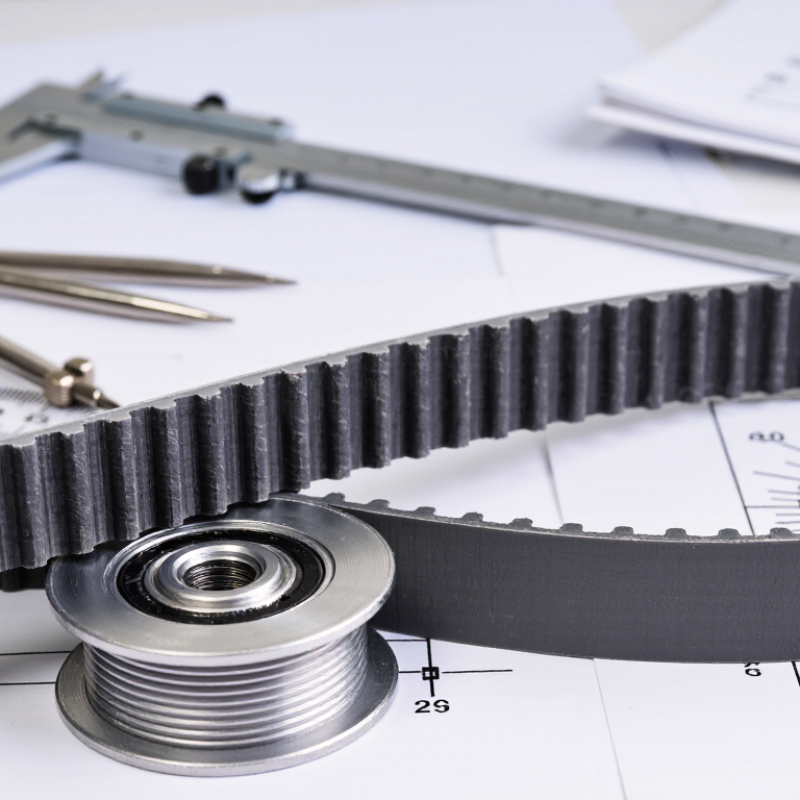
A PU Car XL timing belt combines a polyurethane body with an XL tooth profile, but “car” does not confirm suitability for an engine.
That spacing matters: a belt can look close yet ride incorrectly on a pulley. Count the teeth, measure belt width, and confirm the pulley profile before ordering. Small details matter.
Polyurethane can offer wear resistance and dimensional stability, but the belt’s actual load rating depends on its construction, width, cord material, and operating conditions. Compare the supplier’s technical data with your measured pulley diameter, center distance, speed, and expected load.
A narrow belt on a dusty workshop drive may behave differently from one in a clean, controlled assembly. Do not assume an XL belt is an engine camshaft belt; automotive timing systems often require specific profiles and validated components.
I would verify the application against the equipment manual, not just a product listing. ISO dimensions are a useful starting point, not a complete performance guarantee.
Identify exactly what the belt drives before comparing sizes. Is it an engine camshaft, an accessory, or another mechanism? These systems do not share interchangeable belt specifications. A PU XL belt has a particular tooth profile; “XL” alone does not confirm that it suits your vehicle. Check the owner’s manual or service data for the required profile, tooth count, width, and material. Check the label. If you inspect an old belt, count its teeth and measure its width and tooth spacing. Do not rely only on its outside length, especially if the belt is stretched or worn.
Next, match the belt to its working conditions. Note the engine bay’s temperature, exposure to oil or coolant, operating speed, and tensioner design. A belt that fits the pulleys may still fail under heat or incorrect tension. For engine timing, precise synchronization matters; a tooth skip can cause serious engine damage. Do not substitute a generic XL belt unless the vehicle’s specifications explicitly call for that profile and material. I would verify the data twice, even when the old belt looks like a perfect match. Looks can mislead. If service information is unclear, ask a qualified technician to confirm the application before installation.
Choosing a PU car XL timing belt starts with the pulley, not the belt label. XL usually refers to a 0.200-inch tooth pitch, but confirm the pulley specification before ordering. Pitch is the distance between matching points on adjacent teeth. A small mismatch can cause poor meshing, noise, or rapid wear. Check it carefully.
Next, match belt length and width. Count the teeth on the existing belt if it is intact, then verify its pitch length against the pulley layout. Do not rely on a stretched or damaged belt alone. Measure pulley-to-pulley spacing and check the tensioner’s adjustment range. Width matters too: a belt that is too narrow may not track securely, while excess width can rub nearby parts. Close is not enough.
Finally, compare the tooth profile with the pulley grooves. XL belts commonly use a trapezoidal profile; they are not automatically interchangeable with round-tooth profiles. Inspect the pulley for worn or chipped teeth, and confirm that the PU material suits the operating temperature, load, and exposure to oil or moisture. I would recheck the measurements before fitting; belt markings can be unclear. A quiet test run helps, but it cannot replace correct specifications.
Use this guide to compare an existing belt or specify a replacement. XL is an inch-pitch trapezoidal timing-belt profile; confirm that the belt and pulley tooth geometry are compatible before ordering.
| Dimension | What to Check | XL Reference or Calculation | Selection Guidance |
|---|---|---|---|
| Tooth pitch | Distance from the center of one tooth to the center of the next, measured along the belt pitch line. | XL pitch = 0.200 in (5.08 mm). | Match the pulley pitch exactly. Do not select an XL belt if the pulley uses a different pitch, such as an HTD or metric trapezoidal profile. |
| Tooth profile | Tooth shape and dimensions, including the fit between belt teeth and pulley grooves. | XL uses a trapezoidal tooth profile. | Verify the pulley is designed for XL teeth. Similar-looking profiles are not necessarily interchangeable; check the pulley drawing or specification. |
| Pitch length | The belt length measured around its pitch line, rather than its outside circumference. | Pitch length = number of teeth × 0.200 in. For example, 75 teeth × 0.200 in = 15.0 in (381 mm). | Use the belt marking or a reliable belt specification where available. An outside-circumference measurement may not equal the stated pitch length. |
| Width | The belt’s nominal face width, excluding any flanges on the pulleys. | Common nominal widths include 0.25 in (6.35 mm), 0.375 in (9.53 mm), 0.50 in (12.70 mm), and 0.75 in (19.05 mm). | Match the original belt width and ensure it fits the pulley face without rubbing against flanges or adjacent components. |
| Belt construction | Polyurethane body, tensile-cord material, and any manufacturer-specific construction details. | Construction options vary by supplier and application. | Confirm the belt is suitable for the operating temperature, load, environment, and required flexibility. Do not assume all PU belts have the same cord or performance rating. |
| Pulley tooth count | Number of teeth on each pulley and the corresponding ratio. | For a matched pitch, speed ratio is determined by the driven pulley tooth count divided by the driver pulley tooth count. | Check tooth counts if replacing or redesigning a drive. Belt pitch must match both pulleys. |
| Center distance and tension | Distance between pulley shafts and the available adjustment or tensioning method. | Final belt length depends on pulley sizes, center distance, and the drive layout. | Use the drive manufacturer’s calculation method or a verified belt-length selection tool. Set tension to the system specification; excessive tension can overload shafts and bearings. |
XL pitch-length examples
| Illustrative Belt Designation | Pitch Length | Approximate Metric Length | Tooth Count at 0.200 in Pitch | Width Indication |
|---|---|---|---|---|
| 100XL025 | 10.0 in | 254 mm | 50 | 0.25 in nominal |
| 120XL037 | 12.0 in | 304.8 mm | 60 | 0.375 in nominal |
| 150XL050 | 15.0 in | 381 mm | 75 | 0.50 in nominal |
| 200XL075 | 20.0 in | 508 mm | 100 | 0.75 in nominal |
For a PU car XL timing belt, compare the polyurethane body and the reinforcement cords as a working pair. RMA/ARPM profile tables specify the XL tooth pitch as 0.200 inch, or 5.08 mm. That dimension helps confirm profile compatibility, but it does not prove the belt suits a particular engine. Check tooth shape, width, pulley condition, and the vehicle maker’s specifications. Polyurethane can resist abrasion and oil exposure, while cord choice affects stretch and flexibility. Steel cords help maintain length under load; aramid cords are lighter but may behave differently under repeated bending.
The U.S. Department of Energy’s belt-drive guidance reports efficiency near 95% for properly selected and maintained belt drives. This is general drive-system data, not a timing-belt test, so treat it as context rather than a guarantee.
Fit matters. A mismatch can cause noise, tracking problems, or early wear, even when the material looks robust. Inspect the belt for edge fraying and uneven tooth wear, and ask for tensile, elongation, and temperature data from the supplier. I would not choose steel automatically: its dimensional stability is useful, but pulley alignment and installation quality still matter. Small details count. And the evidence can be incomplete.
An XL label is not a vehicle-fit guarantee. It identifies a tooth profile with a 0.200-inch (5.08 mm) pitch. Before choosing a PU belt, confirm the vehicle or equipment specification, tooth count, belt width, cord type, and pulley profile. Use it for an engine only when the service specification explicitly calls for that belt type. A mismatch can skip teeth, damage pulleys, or cause engine failure. Fit comes first.
Check the belt’s stated material, tensile cords, temperature range, and resistance to oil or coolant. Polyurethane can suit some drives, but it is not automatically a substitute for a belt made to a different specification. S&P Global Mobility reported that the average age of U.S. light vehicles reached 12.6 years in 2024. Older vehicles make careful service-history checks especially useful; age alone, however, does not prove a belt needs replacement.
No universal interval exists. Follow the vehicle maker’s mileage and time limits, since belts can age even when a car is driven little. If records are missing, ask a qualified technician to inspect the belt and related components. Look for cracks, damaged teeth, fraying, contamination, or abnormal tension. Inspection helps, but it cannot reliably reveal every internal weakness.
XL usually indicates a 0.200-inch (5.08 mm) tooth pitch. Confirm the pulley specification before ordering.
Count the teeth on an intact belt and check its pitch length. Measure pulley spacing and the tensioner’s adjustment range. Close is not enough.
No. Match the tooth profile to the pulley grooves. XL belts commonly have trapezoidal teeth, which may not fit round-tooth pulleys.
Steel cords help maintain belt length under load. Aramid cords are lighter but may respond differently to repeated bending. I would not choose by material alone.
No. Check the vehicle specification, operating temperature, load, and exposure to oil or moisture. An XL label does not confirm vehicle fit.
Check pulley teeth for chips or wear. Look for fraying, damaged belt teeth, contamination, and abnormal tension. Small details matter.
There is no universal interval. Follow the vehicle maker’s mileage and time limits, since a belt can age even when driven little.
No. Inspection can reveal cracks or uneven wear, but it may miss internal weakness. If service records are missing, ask a qualified technician to assess it.
Choosing a Pu Car Xl Timing Belt in 2026 starts with understanding the available belt types and specifications, then identifying the vehicle’s timing system and the conditions it must handle. Check the manufacturer’s vehicle requirements and confirm the belt’s intended application before comparing options. Accurate measurements matter: match the pitch, length, width, and tooth profile to the existing system, since even small differences can affect fit and operation.
Next, compare polyurethane construction and reinforcement options based on expected loads, temperature, and operating environment. Before purchasing, verify compatibility using reliable vehicle or component documentation, and assess the belt’s quality and suitability for the intended service life. Follow the vehicle’s recommended inspection and replacement intervals, and replace the belt when wear, damage, or age indicates it is due. These steps help ensure a properly matched belt and support dependable timing-system performance.
