 Huishi
An Aluminum Pulley transfers rotational force between a shaft and a belt. You may find one inside a small conveyor, workshop machine, ventilation system, or exercise equipment. Its light weight can reduce rotating mass, which matters when a motor starts, stops, or changes speed often. The pulley’s groove also guides the belt and helps maintain a steady path. Simple job. Important results.
Material choice still depends on the work. Aluminum resists corrosion in many everyday environments and is easier to machine than some heavier metals. But it may not suit every high-load or abrasive application. The U.S. Department of Energy’s Improving Motor and Drive System Performance: A Sourcebook for Industry emphasizes proper belt selection, alignment, and maintenance. DOE guidance puts efficient belt-drive performance around 95% or higher, depending on the system and its condition. That figure describes a well-matched drive, not a guarantee for every pulley. A worn belt or poor alignment can waste energy, even with a carefully made part. The following guide explains common uses, benefits, limitations, and selection factors. It also asks a practical question: is aluminum actually the right material for your machine? Sometimes, the lighter option is not the safer or longer-lasting one.
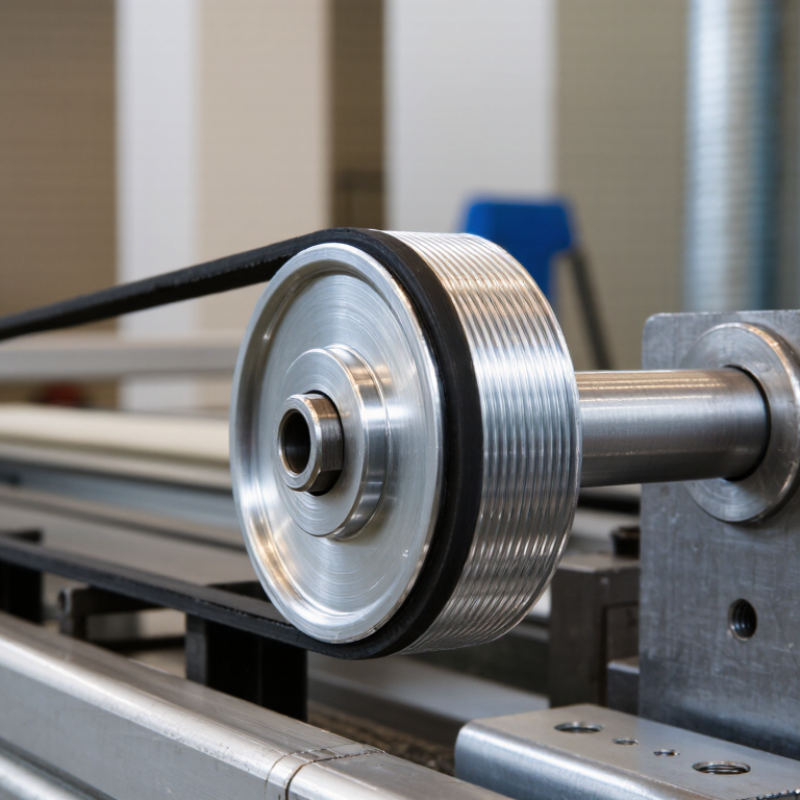
In belt-driven systems, an aluminum pulley transfers rotation from a motor to a fan, pump, conveyor, or other driven component. Its grooves guide a matching belt and help maintain a steady path as the shafts turn. Because aluminum is relatively light, it can reduce rotating mass in equipment that starts and stops often. That matters. Common examples include ventilation fans, light-duty conveyors, packaging equipment, and workshop machinery. Some small pumps also use aluminum pulleys where operating loads and temperatures suit the material.
The right pulley depends on more than its weight. The belt profile, shaft diameter, speed, load, and operating environment all affect fit and service life. A pulley that is too small may make a belt bend sharply; poor alignment can cause uneven wear or belt noise. It is tempting to call aluminum the better choice, but that shortcut deserves a second look. Abrasive dust, high shock loads, or demanding temperatures may call for another material or a different design. During inspection, check for worn grooves, cracks, looseness, and belt dust near the drive. Even a well-made pulley cannot compensate for incorrect tension. The application details matter.
| System or Application | How the Pulley Is Used | Common Belt Type | Why Aluminum May Be Suitable | Selection Consideration |
|---|---|---|---|---|
| HVAC fans and blowers | Transfers motor rotation to a fan shaft and can provide a chosen speed ratio. | V-belt | Its relatively low mass can reduce rotating inertia, and aluminum resists rust in many indoor environments. | Match the pulley groove profile and diameter to the belt and required fan speed; check balance and operating load. |
| Light-duty conveyors | Drives a conveyor roller or shaft, or guides a belt in a compatible drive arrangement. | V-belt or synchronous belt, depending on the design | Low weight can help reduce the load on the drive, while corrosion resistance can be useful in suitable environments. | Confirm the pulley is designed for the belt type and the conveyor’s starting load, tension, and duty cycle. |
| Pumps | Connects a motor to a pump shaft and sets the driven shaft speed through pulley diameter. | V-belt | A lightweight pulley can be useful on compact or moderate-duty drives where reduced rotating mass is desirable. | Check torque capacity, shaft fit, alignment, and the pump manufacturer’s speed limits. |
| Small compressors | Transfers power from the motor to the compressor crankshaft or drive shaft. | V-belt | Aluminum may be appropriate for a properly rated drive where low pulley mass is beneficial. | Compressor starting torque and cyclic loads can be high; verify material, hub, and belt-drive ratings before use. |
| Machine tools and workshop equipment | Drives spindles, fans, or auxiliary shafts; stepped pulleys can provide selectable speed ratios. | V-belt or flat belt, depending on the machine | Lower mass can help reduce inertia during acceleration and deceleration in suitable applications. | Use the correct groove or belt surface, and ensure the pulley is balanced and rated for the operating speed. |
| Timing and indexing mechanisms | Engages belt teeth to maintain synchronized motion between shafts. | Synchronous (toothed) belt | Aluminum is often used for precision pulleys where low mass and accurate tooth geometry are important. | Match tooth pitch, profile, width, and pulley alignment to the synchronous belt; a toothed belt is not interchangeable with a V-belt. |
| Laboratory and light-duty equipment | Transfers motion between a motor and a small rotating component, such as a roller or fan. | V-belt, flat belt, or synchronous belt, as designed | Its light weight and resistance to atmospheric corrosion can suit clean, lower-load applications. | Consider the operating environment, allowable belt tension, shaft connection, and required service life. |
It transfers rotation from a motor to equipment such as a fan, pump, or conveyor. Its grooves guide the belt.
Its relatively low mass can reduce rotating inertia, especially in equipment that starts and stops often. That helps, sometimes.
A larger pulley moves more belt per revolution. Use v = πDN/60, with effective pitch diameter D in meters and speed N in rpm.
A 0.10-meter pulley turning at 1,200 rpm gives roughly 6.28 meters per second. Real speed may vary.
The belt sits inside the groove, changing its effective running diameter. The outer edge can mislead.
Their groove profile and belt dimensions should be compatible. A mismatch can cause slipping, heat, and uneven wear.
Look for worn grooves, cracks, looseness, belt dust, poor tracking, and incorrect tension. Small signs count.
Abrasive dust, high shock loads, or demanding temperatures may require another material or design. Weight alone is not enough.
An Aluminum Pulley is used in belt-driven systems to transfer rotary motion and power between shafts. It can be found in machinery, ventilation equipment, and other applications where a belt connects a driving shaft to a driven component. Pulley diameter affects belt speed: using v = πDN/60, a larger diameter or higher rotational speed increases the belt’s linear speed, assuming consistent units and operating conditions.
Aluminum has a density of about 2.70 g/cm³, so an aluminum pulley can reduce rotating mass compared with a heavier pulley of similar size. This may help a system accelerate and decelerate more readily. For reliable operation, the pulley’s groove profile must match the belt, while its hub must suit the shaft and mounting arrangement. ISO 4183 provides specifications for grooved pulleys used with V-belts, supporting consistent dimensions and compatibility in belt-drive design.
